• Skip to main content

Cut Lunch Adventures

TREK | LEARN | ENJOY

  • Adventure Resources
    • 1. Adventure Ideas
    • 2. Trek Preparation
    • 3. On Adventure
    • 4. Post-Adventure
    • Tools & Calculators
    • Insurance for Trekking and Mountaineering
      • Insurance for Trekking and Mountaineering
      • Insurance for Australians
      • Covid Insurance
    • Shop
    • Useful Links
  • Where To Go
    • Trek Finder Wizard
    • Himalayas
    • New Zealand
    • Australia
    • North America
    • South America
    • Europe
    • Asia
    • Middle East
  • Self Discovery
  • Fun
  • About
    • Our Story
    • How We Can Help You
    • Testimonials
    • Why Cut Lunch?
  • Contact
    • Contact Us

Hiking

Trekking For Beginners

Published August 2019 by Trevor. Updated February 2022.

In this post

Introduction

  1. Start with Half Day Hikes
  2. Progress to Day Hikes
  3. Test Your Endurance on Multi-Day Hikes
  4. Understand Altitude
  5. Go Trekking!

Introduction to Trekking for Beginners

Whether you’re new to trekking or want to resume from years past, you will need to start somewhere. You’ve maybe talked to people? Bought or borrowed gear? Got your group together or not? Paid your deposit? So, what’s next you may ask?

Well, that depends on your objective and where you’re starting from. If for example, you’re wanting to achieve a 2-3 week trek in the Himalayas or anywhere else then you need to work up to it. We’ll show you 5 simple steps to get you there – starting from short hikes then progressing to longer multi-day hikes and finally your trek.

trekking for beginners

Practice makes perfect

From our experience, you need to practice. Practice makes perfect so they say! Plus, it’s a great opportunity to not only test and fine tune gear but also yourself, in all sorts of weather and terrain.

For example, we were planning a trip back to the Himalayas, deciding to hit up our local trails around where we lived. The weather was absolutely atrocious with Sydney encountering ‘cyclonic’ rain – in fact the heaviest rain in a day that Sydney had ever experienced. So heading out with our ‘lucky’ gore-tex raincoats, this was a test in the extremes. Well, guess what? They leaked like a sieve, so re-waterproofing was a must. Now imagine if we had taken off up to the remote Himalayas encountering a snow storm or heavy rain without testing our gear.

The above is just one example, but I could share with you other stories around choosing the right boots, backpack, trekking poles and clothing just to name a few.

So, let’s get started. It is recommended that you progress through these 5 steps for trekking for beginners. At any stage you can also refer to our section on how to prepare for a trek, which covers the 3 secrets to success – gear, fitness and mental toughness.

Spit to Manly Walk, Sydney

1. Start with half day hikes

Begin with short half day hikes of around 3-4 hours in your local neighbourhood. To start, don’t make it too tough, but you still want to test out those boots you’ve just bought, plus your pack amongst other things. Load your pack up with around 3-5kg to start, then progress from there over the next few weeks, building up your stamina slowly. Even on short hikes make sure you are taking sufficient gear e.g. clothing, rainwear, sun protection, first aid, water and snacks.
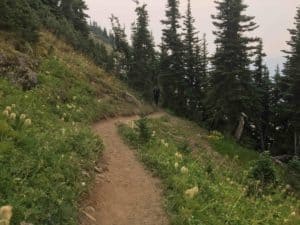
High Note Trail, Whistler, Canada

2. Progress to day hikes

Now you’re ready to progress to full day hikes. Try staying out for at least 6-7 hours – find some hills and other varied terrain. Great for testing out boots and yourself, especially any niggling injuries such as knees or ankles. Try firstly without trekking poles – then poles. Did it make any difference? How was your stability going uphill then coming down? How did your body cope with hours on the trail? Hydration – which works best, water bladder or bottles? Go out in gnarly weather – how did you cope? Work up to carrying heavier loads e.g. 10-12kg.

3. Test your endurance on multi day hikes

Now, here comes the serious stage. Multi day hikes (2-5 days) are great for testing how you handle walking day after day on the trail. You’re also sleeping out in the wilderness. You need to carry different gear and supplies and manage your water. Mental toughness also springs to mind. We are often reminded that the trek is 20% physical and 80% mental. How will you handle all the things that you think will go wrong? Plan for the worst – hope for the best. It can be helpful to go with a guided group to make life easier, especially if its your first overnight hike.

Everest Base Camp
Everest Base Camp

4. Understand altitude

They say nothing prepares you for altitude, other than altitude itself. Trekking for beginners would not be complete without a section on this. If you’re trekking in the Himalayas, Machu Picchu or planning to climb Kilimanjaro, you need  to start thinking about altitude risks. Areas are often considered ‘high altitude’ if they reach at least 2,400m (8,000ft) above sea level.

Research beforehand about acute mountain sickness (AMS) and a plan to prevent it. For example, how many acclimatisation days do you have built into your itinerary? What is your hydration strategy? Do you have the correct insurance for rescue in case things go wrong? If you don’t think AMS is serious, remember this little known fact. More than 10% of people trekking to Everest Base Camp (5,380m/17,600ft) get evacuated before they even get there. Why you may ask? Well, from our research, we’ve observed that it is mostly from AMS. People heading up to altitude too quickly, not enough acclimatisation rest days, don’t hydrate, booking with a cheap operator – all of these are just some examples.

Everest Base Camp Trek - good trekking for beginners
Everest Base Camp Trek

5. Go trekking!

If you’ve followed the above plan for trekking for beginners then there’s nothing left but to go trekking! Start here to see our ideas for how to enjoy and get the most out of your trekking adventure.

Your Guide To Successful Adventure Projects

Hiking vs Trekking

Published July 2019 by Emma. Updated February 2021.

Hiking vs trekking – it all depends on where you come from, what you’re doing and where you’re going.

So what is trekking or any other variation of walking? You can call it what you like but this is how we see it.

Trekking

Multi-day hiking usually in mountainous areas and over an extended period of time. This term is typically used for ‘hikes’ in the Himalayan and Karakoram Ranges, Africa and South America. Often this involves the option to have porters to carry overnight gear while trekkers carry enough for the day in their backpacks. Trekking is also used to describe the Kokoda Track in Papua New Guinea – a trek through wartime history and local culture.

Hiking

Long walks out on trails with a backpack – these could be single-day or multi-day hikes.

Tramping

Hiking in New Zealand. There is a great network of ‘tramps’ in New Zealand, including the Great Walks. These are maintained by the Department of Conservation. There is also the Te Araroa Trail which goes the length of New Zealand.

Bush-walking

Hiking in Australia. Each State or Territory in Australia maintains it’s own trails and there is a great variety of climates and landscapes to choose from.

Thru-hiking

Multi-day hiking. A term used in the USA – e.g. the Pacific Crest Trail and the Appalachian Trail.

Section-hiking

Hiking long distance trails in separate stages. A term more commonly used in the USA.

Walking, Hill-walking and Rambling

Various terms to describe hiking in the UK.

Backpacking

Either travelling the world with your backpack, or thru-hiking carrying everything with you on your back.

Pilgrimage

A long journey to a sacred place e.g. the Camino de Santiago or Japan’s Kumano Kodo or the trek around Mt Kailash in Tibet China.

Mountaineering

Climbing mountains which require the use of ropes and other technical gear like crampons and ice axes.

Hiking vs trekking

Hiking vs trekking – we hope this has helped explain the difference between hiking and trekking and a few other terms!

Now get started on your adventure or check out our guide to trekking for beginners.

Hiking vs trekking

Australia: Spit to Manly Walk

Published July 2019 by Trevor. Updated July 2020.

The Spit Bridge to Manly walk is a beautiful 10km/6.2mi moderate hiking trail (one way) close to the city of Sydney, Australia. It boasts native bushland, quiet inner harbour beaches, picturesque bays and panoramic ocean views.

Spit to Manly Map
Map of the Spit to Manly Walk

Sometimes during the week, but more often on weekends, you will find trail runners, avid walkers and locals on the trail. You may also encounter some high altitude trekkers or mountaineers completing the walk both ways and climbing up the many steps with a heavy backpack for training.

Water views
Water views

While you can walk from either direction, public transport options to return to your destination are more readily available once you reach Manly. As are cafes and other eateries. For a good circuit route, you can do the walk from the Spit Bridge. Then lunch in Manly and then get the ferry back to the city.

Beautiful view through the North and South Heads of Sydney Harbour

Whether you’re a local or a visitor to Sydney, we recommend the Spit to Manly Walk as a great way to see the harbour from a different perspective. It’s an easy trail to access on the northern side of the harbour and is close to the city.

City Views
City Views

Onwards and upwards!

Trevor

Insights

  • The walk forms part of the famous 20km Manly Scenic Walkway. It runs from the Spit all the way to Manly North Head.
  • It is well sign-posted and maintained, taking around 3 hours to complete, depending on your fitness level.
Signpost to Aboriginal Engravings
  • You can do this walk year round.
Water dragon near the path
Eastern water dragon near the path (not dangerous!)
  • Take good trail or hiking shoes, as the walk is over varied terrain.
Steps along the route
Steps along the well formed route
  • There is a kiosk at Clontarf Reserve, around an hour into your walk from the Spit Bridge. The kiosk serves coffee, cold drinks and snacks and is a handy pit stop.
Cafe at Clontarf
Cafe at Clontarf
  • For another hike in the broader Sydney region, read our post on the Six Foot Track in the Blue Mountains.
Great view to the Heads
Great view to the Sydney Harbour Heads

Australia: Bay of Fires Walk, Tasmania

Published July 2019 by Trevor. Updated July 2020.

After flying into Launceston, it was time to meet our team and head off on our 3 day Bay of Fires walk. We organised the walk through Life’s an Adventure.

Moody scene on the Bay of Fires Walk

Situated on the east coast of Tasmania, this magical and remote landscape showcases pure white perfect beaches, vivid orange granite boulders and sapphire and emerald seas.

Colours of the Bay of Fires

Staying a night at a local ‘beach shack’ was a treat. Coupled with eating the local produce and sampling local wines, all of which assured you of a great night’s sleep and being suitably charged for the next day.

White sand beaches
White sand beaches

There is often a debate between guided and unguided hikes. We chose the guided one, as being newbies to the region we wanted to learn as much as we could about the area. From the history and geography through to the stunning landscape, we weren’t left disappointed. Bay of Fires is a truly stunning destination and a photographer’s paradise.

Big skies and beaches

Onwards and upwards!

Trevor

Varied terrain on the Bay of Fires Walk

Insights

  • Distance is around 33km/20.5mi, and it’s classed as a moderate walk.
  • However you still need to take good footwear as you will be walking over rocks, beaches and other varied terrain.
  • For example there is lots of beach walking, rather than bush-walking.
Looking back towards the lighthouse
  • Water is readily available.
  • If you’ve never been to Launceston, it’s worth leaving a spare day to explore.
  • Read more information on the Life’s an Adventure Bay of Fires Walk here
  • You can also consider one of the many other hikes in Tasmania. For example read our post on the Three Capes Track
Plenty of sea views
Plenty of sea views!

Nepal: Makalu Base Camp

Published June 2019 by Trevor. Updated May 2025.

We trekked to Makalu Advance Base Camp as part of our project to trek to the base camps of all the world’s 14 highest mountains over 8,000m. You can read our blogpost on our Project Base8000 website.

Watch the Video!

Related Posts

  • how to get to Kathmandu
  • « Go to Previous Page
  • Page 1
  • Page 2
  • Page 3
  • Page 4
  • Page 5
  • Page 6
  • Interim pages omitted …
  • Page 12
  • Go to Next Page »
  • Terms of Use
  • Privacy Policy
  • Disclosure

© 2026 · Cut Lunch Adventures